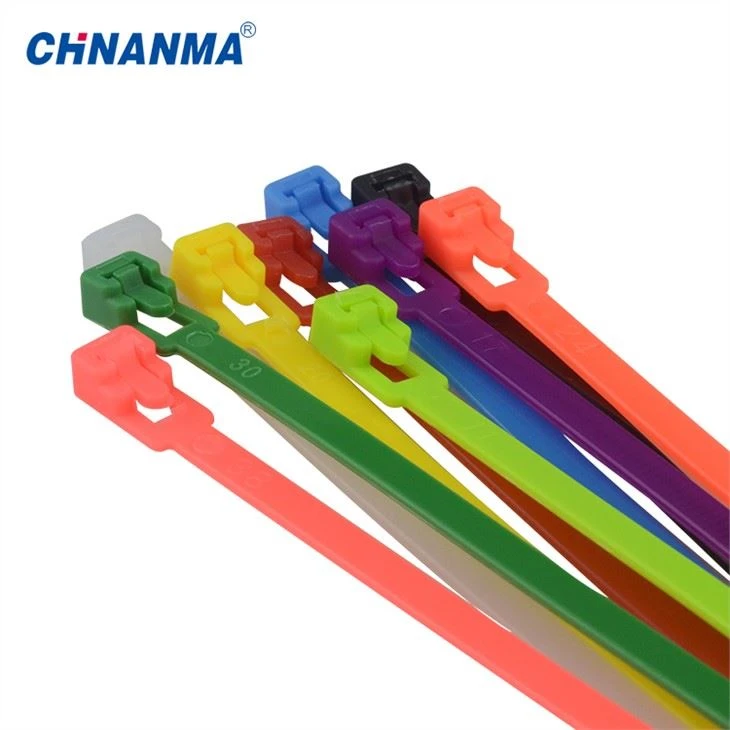
Releasable cable ties are fastening products designed for easy unlocking, adjustment and reuse. Widely used in electrical equipment, communication, automobile manufacturing, industrial machinery, office equipment and other industries. Unlike standard, single-use nylon cable ties, releasable ties are better suited for applications that require periodic maintenance, rewiring, or adjusting the positioning of bundles. As a supplier of releasable cable ties, we recommend that customers select the appropriate product based on the product bundled, operating environment, load strength required, and frequency of assembly or disassembly.
1.Electrical Equipment and Cable Management
In electrical control cabinets, distribution equipment, and automation systems, a large number of power supply, control, and signal cables are often organized. Releasable cable ties allow grouping and fixing of lines to ensure a neat layout of cabinets for future maintenance or adjustment.
Common applications include:
-Wire bundles are organized inside the control cabinets
-Ensuring the safety of cables in distribution equipment
-Management of control wiring for automated production equipment
-temporary bundling during maintenance of electrical equipment
When choosing a tie, consider requirements of electrical insulation, material temperature resistance and locking reliability; also make sure the tie is not too tight to damage the cable.
2.Telecommunications Equipment and Network cables
Communications cabinets, server racks and network distribution systems typically contain a large number of network cables, fiber optics and interconnections. These cables may require to be adjusted frequently as equipment is upgraded or the network expands.
Releasable cable ties allow maintenance workers to reorganize wire bundles without having to cut and discard cable connectors during each adjustment. However, careful selection of the fastening method for bending radii or compression sensitive cables --such as fiber optics --is essential to prevent signal transmission issues caused by overtightening.
3.Automotive Manufacturing and Wire Harness Management
The vehicle contains complex wiring systems, including seat belts for the engine compartment, bodywork, dashboard and electronic control systems. Released Releasable cable ties can be utilized in some stages of production assembly, to organize wire harnesses, and as aids during vehicle repairs. For example, during car manufacturing, workers can temporarily organize wiring wire harnesses releasable cable ties, making it easier to inspect cable wiring or adjust assembly positioning.
It is important to note that cable ties used in vehicle assembly must meet relevant automotive industry standards. Only verified fasteners specified by the manufacturer should be used for wire harnesses located in engine compartments, hot zone, vibration zone or area critical to vehicle safety; the mere fact that cable tie are ``releasable"is not sufficient to determine their suitability.

4. Industrial Machinery and Automated Production Lines
Industrial machinery usually has complex electrical wiring and control systems. The positioning of wire harnesses may need to change during installation, debugging, and maintenance of the device; therefore, the released releasable cable ties has a distinct advantage in areas requiring frequent adjustments.
Typical applications include:
Organize auxiliary wiring in CNC machine tools and processing equipment;
-Securing sensor cables on automated production lines
Management of control wire bundles in packaging machinery and conveyor systems
-Temporary fixing of wiring during major repairs or maintenance of equipment
In an industrial environment of continuous vibration, oil contact, or high temperature, it is essential to verify the chemical resistance, temperature tolerance, and strength of the locking mechanism of the cable joint.
5. Household Appliances and Electronic Products
Household appliances, electronic equipment and small electromechanical products often require the organization of internal wires and connection cables. Releasable cable ties can be used for assembly, testing, maintenance and general cable management of such products.
For example, during equipment repairs, technicians can unhook cable ties, inspect them and then re-secure them after repair, reducing the need to replace consumables.
The internal space, working temperature and electrical safety requirements of the equipment must be taken into account when selecting products for these applications. If ties are to be used to secure components in the final product, they must also meet the specific design and certification requirements of the product.
6. Office Environments and Everyday Cable Management
Releasable cable ties can also be used in offices, meeting rooms and home workspaces to organize computer power cords, monitor cables, printer connections and other equipment wiring.
In these settings, the main focus is often on ease of installation, a clean appearance, and the ability to reuse ties. When office equipment needs to be relocated or new cables added, you can simply untie and adjust the cable connectors, which can help reduce the
consumption of single-use (non-releasable) cable ties.
7.Temporary Installations and Equipment Testing
During equipment commissioning, exhibition setup, engineering installations or testing projects, some cables may require only temporary securing and may need to be removed or reconfigured in the future.
Releasable cable ties perfect for these tasks because they allow frequent adjustments and help people organize wiring quickly. However, factors such as wind, humidity, temperature fluctuations and actual load must be taken into account when used in temporary outdoor works; standard cable ties should never be used as load-bearing or lifting equipment.
8. Guide to the Selection of Connectors for Released Cable by Industry
|
Industry |
Main Applications |
Key Selection Factors |
|---|---|---|
|
Electrical Equipment |
Securing cables and control wiring harnesses |
Insulation requirements, temperature resistance, locking reliability |
|
Telecommunications and Networking |
Organizing network cables and equipment wiring |
Ease of installation and removal, cable protection, tie dimensions |
|
Automotive Manufacturing |
Wiring harness organization and assembly support |
Temperature resistance, vibration resistance, industry standards |
|
Industrial Machinery |
Managing equipment wiring |
Tensile strength, oil resistance, durability |
|
Household Appliances |
Internal wiring harness organization and maintenance |
Material safety, installation space, temperature resistance |
|
Office Environments |
Organizing desk cables and equipment wiring |
Appearance, length, ease of reuse |
|
Temporary Projects |
Testing and temporary cable routing |
Installation efficiency, removal method, environmental adaptability |
FAQ: Frequently Asked Questions about Releasable Cable Ties
Q1: Is the cable that can be released suitable for outdoor use?
Some models are suitable for outdoor environments, provided the material is UV resistance, weather resistance and temperature tolerance. For long-term outdoor use, it is recommended to select products that have been tested for the relevant environment.
Can loosen tethers be used to secure hoses?
They may be used to organize or support certain types of hose; however, appropriate specifications must be selected based on hose diameter, material properties and required retention. They cannot be used as direct substitutes for specialized pipe clamps, rated pressure hose clamps or other load-bearing connectors.
Under what circumstances is a cable ties that can be released the best option?
Released Releasable cable ties are often the most convenient option for applications that require frequent maintenance, harness adjustments, equipment upgrades, or repeated installation and disassembly. If no further adjustment is required after the initial fastening, standard nylon cable joints may be a more economical option.