With the advancement of industrial automation, intelligent manufacturing and digital production, the requirements for precision detection, rapid response and stable control of equipment are becoming more and more demanding. Inductive proximity sensor switches have been widely used in industrial equipment for their non-contact detection, high reliability, high response speed, strong interference immunity and long service life.
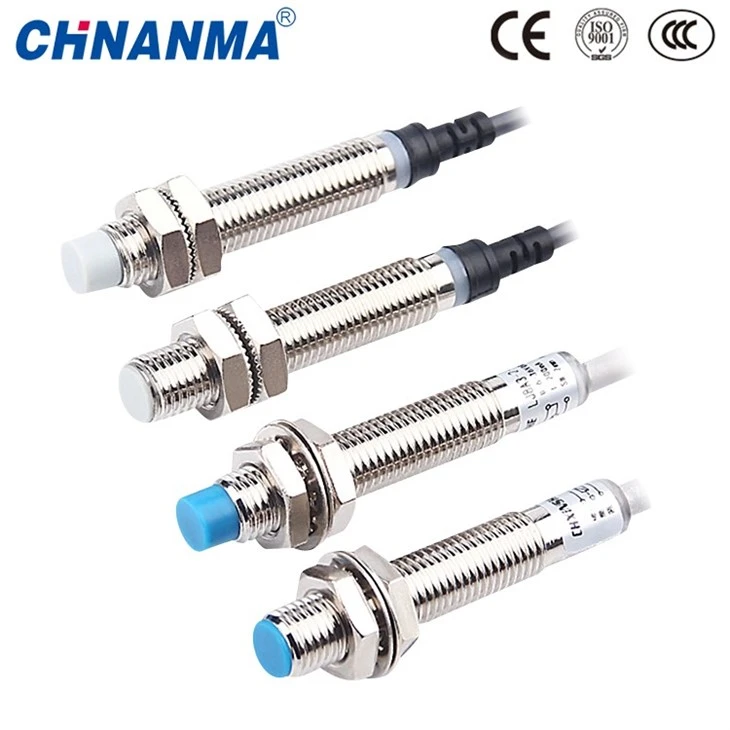
Unlike mechanical limit switches, inductive proximity sensors do not require direct contact with the target object; instead, they utilize electromagnetic induction to detect changes in the position of metal objects. When a metal object enters the sensor's detection range, changes in the internal electromagnetic field are detected and converted into a switching signal, which controls the device's operation.
At present, inductive proximity sensor switches are widely used in automobile manufacturing, mechanical processing, packaging printing, electronics manufacturing, logistics transportation, electrical equipment and many other industries.

I. Automotive Manufacturing Industry
Automotive manufacturing is one of the most widely used inductive proximity sensors. Modern car production lines contain a plethora of automated equipment-such as robotic welding systems, components assembly stations, delivery systems and inspection equipment-all of which require precise location feedback.
Main application scenarios:
1.Robotic positioning and detection
Industrial robots must accurately determine whether a workpiece is in the correct position on a car body welding line. Inductive proximity sensors detect:
Location of body parts;
Workpiece fixture status;
The position of a robotic arm in motion.
Once a metal workpiece is detected in place, the sensor sends a signal to the control system to ensure the robot takes the next step.
2. Auto component assembly
In the production of engine, gearbox, chassis and other components, it is important to verify that the components are installed correctly.
Inductive sensors can be used to:
Bolt detection;
(a) Counting of hardware parts;
Confirmation of assembly positioning.
Considering the presence of oil, dust and mechanical vibration in automobile manufacturing environments, the environmental elasticity of inductive sensors has obvious advantages.
II. Mechanical Processing and CNC Equipment Industry
Precise location control in machine tools, processing centers, and automated processing equipment directly affects the quality of processed products.
Key applications include:
1. CNC machine tool position detection
Inductive proximity sensors detect:
the moving position of the workbench;
Tool changing position;
The clamping status of the workpiece. Compared with traditional mechanical switch, inductive sensors lacks mechanical contact and is not easily worn by frequent operation.
2. Metalworking line
In stamping, cutting, drilling and milling equipment, sensors can determine:
Whether metal sheets is in position;
Whether the workpiece has entered the processing area;
Whether moving parts of the device reach the specified position.
This not only improves productivity, but also reduces the risk of equipment downtime.
III. Packaging Machinery Industry
The packaging industry requires high operation speed and precise positioning, so inductive proximity sensors have been widely used in automated packaging equipment.
Commonly used device applications:
Automated packaging machines;
Filling equipment;
Sealing machines;
Labeling machines;
Conveyor systems.
Specific applications:
1. Metal Part Detection
Some packaging lines require testing for specific points through which metal products pass, such as:
Hardware packaging;
(a) Counting of hardware parts;
Classification of industrial products.
2. Mechanical Motion Control
Sensors detect:
Pneumatic cylinder positions;
The opening/closing state of the fixture;
The operation of packaging mechanisms.
Real-time feedback helps improve equipment automation.
IV. INTRODUCTION Electronics manufacturing
Although plastics and non-metallic materials are widely used in the electronics industry, the mechanical structure of manufacturing equipment still contains many metal components, so inductive proximity sensors play a crucial role.
Application scenarios:
1. Automated Placement
On SMT (Surface Mount Technology) production lines, sensors can be used to detect:
Location of mobile platform;
Status of metal feeding mechanism;
Positioning of automatic assembly mechanisms.
2. Semiconductor Equipment
Semiconductor manufacturing equipment requires high accuracy and stability, and inductive sensors can be used for:
Positioning of wafer handling mechanisms;
Testing of metal mechanical components;
Automatic door control.
V. Logistics Conveying and warehousing automation industry.
With the development of intelligent warehousing, automated delivery systems and robotic handling equipment are becoming more and more popular.
Inductive proximity sensors are mainly used for:
1. Conveyor Line Detection
For example:
Check pallets are in position;
Determine the location of metal containers;
Control the start and stop of conveyance equipment.
2. Automated Handling Robots
Autonomous guided vehicles and industrial robots require a large number of position-sensing components. Inductive sensors Assist Device:
Determine the location of obstacles;
Detect parking positions
Accurate positioning.
VI. INTRODUCTION Food and Beverage Machinery Industry
Although the food industry mainly processes nonmetallic products, stainless steel structures and metal components are common in manufacturing equipment.
Inductive proximity sensors can be used to:
Positioning of filling machinery;
Testing of transport equipment;
Control of packaging equipment;
Position detection of stainless steel components.
Industrial grade sensors are well suited to meet long-term usage needs as food production environments typically require clean, waterproof, and corrosion resistant equipment.
VII. Power Equipment and Energy Industry
Inductive proximity sensors also play a crucial role in the manufacture of electrical equipment, new energy equipment and large mechanical systems.
Application areas:
1. Electrical equipment testing
For testing:
Mechanical location of switchgear;
Circuit breaker mechanism status;
The moving position of metal components.
2. New energy equipment
In the area of new energy production equipment, for example:
Lithium battery production lines;
Production equipment for photovoltaic components;
Wind power equipment manufacturing.
Inductive sensors are used to detect the position of workpieces and the state of automation equipment.
FAQ
Q1: What are the main applications of inductive proximity sensors?
Mainly used in automotive manufacturing, mechanical processing, packaging machinery, electronics manufacturing, logistics automation, food machinery, electrical equipment, new energy equipment and other industries.
Question 2: Why are inductive proximity sensors suitable for industrial automation?
Because they have the characteristics of contactless detection, response speeds, long service life and strong anti-jamming ability, they can meet the long-term operation requirements of automation equipment.
Question 3: Can inductive proximity sensors be used in robots?
Yes. ' Industrial robots often use inductive proximity sensors for workpiece detection, position verification and motion feedback.