Limit switches play a vital role in various industries, including industrial automation, machinery manufacturing, and logistics. As high-precision positioning sensors, limit switches are widely used on various types of mechanical equipment. They act as the equipment's "visual organs" and "hearing organs," accurately sensing key information such as an object's exact position and maximum travel range, and transmitting this information to the control system, enabling precise control and safety protection of the equipment. Currently, many companies in my country use high-precision mechanical devices for production and processing, and most of these rely on limit switches to perform their operations. For example, in crane operations, limit switches ensure that the hook automatically stops when it reaches its maximum or minimum position, preventing collisions and equipment damage. In automated production processes, limit switches precisely control the transfer position of workpieces, ensuring smooth operation of the entire production process. Furthermore, limit switches play a crucial role in specialized environments, such as automotive body painting shops and aircraft maintenance workshops. However, in actual operation, limit switches often suffer damage, which not only hinders the normal operation of the equipment but can also trigger production accidents. Furthermore, inherent defects in limit switches can shorten their service life or even render them inoperable. Therefore, in-depth research into the causes of limit switch damage is of paramount practical importance.
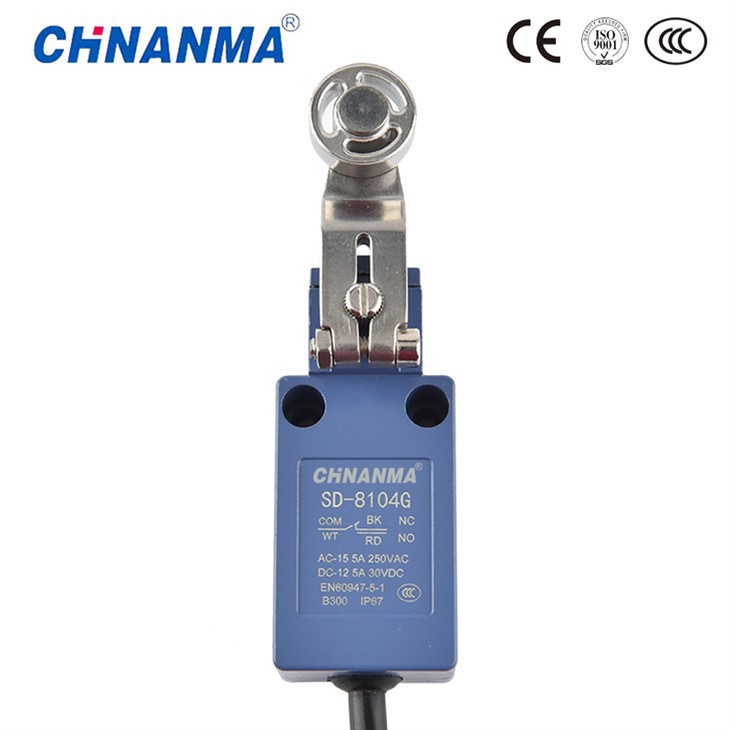
Common Causes of Limit Switch Damage Due to External Physical Factors
(I) Mechanical Impact
Excessive external impact is a common cause of limit switch damage. Limit switches are typically installed on top of buildings or high up outdoors, making them susceptible to unexpected impacts. If a limit switch is subjected to severe impact, its outer casing may break, and internal components, such as contacts, springs, and levers, may also be displaced or damaged. Furthermore, the high vibrations generated by limit switches during operation can easily damage components within the casing, impacting normal operation. During the handling process, operator error can cause the limit switch to collide with other heavy objects, increasing the risk of the casing rupturing. Furthermore, during transportation, vehicle jolting or excessive cargo can damage the limit switch. During equipment installation, if the installation location is inappropriate, the limit switch may be damaged by impact with surrounding components during operation, potentially leading to damage. Furthermore, malfunctions may also be caused by defects in the limit switch itself. For example, at the installation site of some large machinery, due to limited space, the limit switch may rub or collide with moving parts after installation. Prolonged use can damage the limit switch.
(II) Vibration and Shock
Prolonged exposure to vibration can cause the internal components of the limit switch to become loose or break due to excessive fatigue. These failures will cause the limit switch to fail to reliably perform its intended function. For example, in limit switches used on machine tools with high vibration amplitudes, the continuous vibration during operation may cause the internal contacts of the limit switch to gradually loosen, resulting in poor contact. Due to prolonged vibration, the spring may fatigue and fracture, causing the limit switch to lose its original elasticity and fail to reset properly. Furthermore, sometimes the operator accidentally pulls the limit switch a certain distance, causing momentary collision or friction between the contact area of the limit switch and the workpiece, leading to malfunction. Momentary shock can also cause serious damage to limit switches. Therefore, for equipment requiring frequent replacement and maintenance of limit switches, ensuring reliable operation of the limit switches is crucial. For example, in logistics and storage systems, when heavy objects fall from a height and strike equipment, the resulting instantaneous impact force can damage internal components of the limit switch, causing it to fail.
(III) Environmental Corrosion
1. Dust and Contamination: When dust and contamination enter the interior of a limit switch, they adhere to the surface of the contacts, affecting their performance. Therefore, limit switches should be regularly cleaned or replaced with new contact materials during daily production to ensure proper operation. When dust and contamination accumulate to a certain level, contact contact may deteriorate and even cause a short circuit. In certain factory environments with high dust concentrations, such as cement plants and flour mills, limit switches are easily covered with dust and contamination, which can impair their proper operation.
2. Humidity and Corrosion: Humid environmental conditions can cause rust and corrosion on the metal components within a limit switch. Furthermore, rust accelerates oxidation reactions between the metal housing and the contacts, increasing contact resistance. When metal parts rust, their electrical conductivity weakens, making the limit switch's signal transmission unstable. Rust also affects the appearance and reliability of the limit switch. Furthermore, the corrosion process can reduce the mechanical stability of the metal parts, increasing the risk of breakage. For example, in coastal areas, due to high humidity and salt content, limit switches are more susceptible to corrosion, significantly reducing their service life.
3. Extreme Temperature Conditions: Excessive temperatures can cause the plastic components of limit switches to deform and age. Extensive deformation or defects such as cracks require replacement. Deformation of the plastic can alter the internal structure of the limit switch, affecting its operational accuracy. Therefore, these issues must be considered during the design and manufacture of limit switches. Over time, plastic components become brittle, increasing the risk of breakage. Furthermore, high temperatures can cause malfunctions in the limit switch's internal circuitry. At lower temperatures, the material can become more brittle, making the limit switch components more susceptible to breakage when subjected to external forces. Limit switches used in outdoor equipment in cold climates can be damaged by low temperatures.

What electrical faults can easily damage limit switches?
(I) Overvoltage and Overcurrent
1. Overvoltage: Overvoltages, such as those caused by lightning strikes or unstable power supply voltages, can severely damage the insulation within the limit switch. Furthermore, excessive external interference can compromise the insulation strength within the limit switch, potentially leading to safety incidents. When the overvoltage exceeds the limit switch's load capacity, the insulation may break down, exposing electronic components to high voltage and potentially damaging them. For example, during a thunderstorm, lightning can enter the limit switch through power or signal lines, generating excessive voltage that can damage components such as integrated circuits and capacitors within the limit switch.
2. Overcurrent: Excessive current, such as from a short circuit or excessive load, can cause erosion and welding of the limit switch contacts. Furthermore, prolonged short circuits can easily cause the contacts to overheat, leading to failure. When a short circuit occurs, the current rapidly increases, releasing a large amount of heat energy. This causes the surface temperature of the contacts to rise, leading to contact erosion. Furthermore, under overload conditions, the high mechanical stress and thermal shock between the contacts and the core can easily damage the contacts. If the short circuit persists for an extended period, the contacts may weld, preventing the limit switch from properly interrupting the circuit and potentially causing switch failure. When the load exceeds the specified capacity of the limit switch, the contacts may be subjected to excessive current surges, causing them to wear more quickly and reducing the service life of the limit switch.
(II) Electrical Interference
1. Electromagnetic Interference: Electromagnetic fields generated by nearby large motors, inverters, and other equipment can interfere with the signal transmission of the limit switch. Furthermore, overvoltage and overcurrent caused by electromagnetic induction can also cause limit switch failure. Electromagnetic interference can distort the limit switch signal, causing the control system to receive inaccurate signals and triggering erroneous equipment operation. For example, in an automated production workshop, when a large motor operates near a limit switch, the electromagnetic field generated by the motor may interfere with the switch's signal transmission. This could cause the equipment to stop or continue operating before reaching the intended position, disrupting the normal production process.
2. Regarding electrostatic discharge: The damage caused by electrostatic discharge to sensitive electronic components within a limit switch should not be underestimated. In dry conditions, static electricity can easily accumulate on the human body or other objects. When this static electricity is released through the limit switch's connector or casing, it rapidly generates high voltage and high current, potentially damaging sensitive components such as the integrated circuits and sensors within the limit switch.
What damage will the limit switch cause if it is improperly used?
Installation Error
1. Improper mounting position: Factors such as an inclination or inappropriate distance can negatively impact the limit switch's actuation accuracy and stability. Mounting at an excessive angle can cause the limit switch to falsely trigger. If the limit switch is mounted at an angle, the distance between its sensing element and the object being detected may change, potentially causing the limit switch to trigger at inappropriate times or not trigger when it should. If the installation distance is too short, the alarm signal may not be issued in a timely manner. Improper installation distances can also lead to similar problems. For example, if the installation distance is too far, the limit switch may not accurately identify the specific position of an object; if the installation distance is too close, the object's movement may affect it, leading to malfunction.
2. Improper wiring methods: Improper wiring methods, such as reverse polarity connections and short-circuit wiring, can damage the limit switch or cause it to malfunction. Reversing the polarity of the limit switch's power supply can cause a reverse voltage shock to the internal electronic components, causing damage. Short-circuit wiring prevents current from flowing through the limit switch's standard circuit and instead causes a short circuit, generating significant heat and damaging the limit switch.
Excessive load usage
Exceeding the rated load of a limit switch accelerates contact wear and spring fatigue, reducing the switch's service life. Overloads generate large inrush currents between the contacts, causing significant damage. Under excessive load, the contacts experience increased pressure and arcing during closing and opening, which can lead to increased wear on the contact surface and increased contact resistance. Furthermore, the large gap between the contacts and the housing can easily cause short circuits. When a spring is subjected to excessive load for an extended period, it gradually loses its elasticity, preventing the contacts from returning to their original position, negatively impacting the performance of the limit switch.
Inadequate Maintenance
To ensure the stable operation of a limit switch, regular maintenance is crucial. If a limit switch malfunctions due to various reasons during long-term use, prompt repair is required. Without proper maintenance, such as insufficient cleaning and lubrication, the limit switch may lose its flexibility, become stuck, or even suffer damage. Therefore, it is essential to regularly remove or replace contaminants from the limit switch. The accumulation of dust and dirt can interfere with the movement of the limit switch's internal components, leading to contact problems. Rain and snow can also cause water to fall on the limit switch, increasing wear. Failure to regularly lubricate the moving parts of a limit switch can increase friction between components, affecting their proper movement and increasing the risk of sticking. Furthermore, prolonged use can cause rust on the limit switch surface. Prolonged sticking can damage the limit switch components, preventing them from functioning properly.
Conclusion
Taking all factors into consideration, limit switch damage can be caused by a variety of factors, including external physical conditions, electrical faults, and improper operation and use. Therefore, comprehensive measures must be taken to prevent limit switch damage to ensure safe power system operation. The physical structure of a limit switch can be directly damaged by external physical factors such as mechanical shock, vibration, and environmental corrosion. Electrical problems such as overvoltage, overcurrent, and electrical interference can adversely affect the electrical performance of the limit switch. Improper operation and use can lead to poor contact or contact burnout. Improper operation and use, such as installation errors, excessive use, and improper maintenance, can compromise the stability and service life of the limit switch. To extend the lifespan of limit switches and ensure proper equipment operation, proper installation, use, and maintenance are crucial. This article describes the design and fabrication of a new type of portable high-voltage current limiter, focusing on installation steps and precautions. During installation, the instructions in the product manual must be strictly followed to ensure the appropriate installation location and wiring method are used. During operation, the equipment must be protected from overload and the operating environment must be closely monitored to protect the limit switch from mechanical impact or environmental corrosion. In the event of a malfunction, necessary repair measures should be taken based on the actual site conditions. Furthermore, regular maintenance and care are required to ensure that moving parts are cleaned and lubricated, and that electrical connections are secure. These measures ensure the proper functioning of limit switches. Only in this way can we maximize the use of limit switches and ensure the safe and stable operation of industrial production and equipment.