Contactless Detection Technology Drive Industrial Automation Upgrade
With the development of intelligent manufacturing, automated production line and industrial robot, accurate, fast and stable object detection methods has become an important component of modern industrial control system. Traditional mechanical limit switches require direct contact with the target object; long-term operation often leads to wear and tear, measurement errors and increased maintenance costs. By contrast, inductive proximity sensor switches have the characteristics of non-contact detection, high reliability and adaptability to industrial environments. They are widely used in machinery, packaging lines, automobile manufacturing, CNC machining, electrical equipment and other industries.
Inductive proximity sensor switches are mainly used to detect the position, distance or presence of metal objects. Instead of relying on vision, pressure or mechanical contact to identify targets, they utilize electromagnetic induction principles. By detecting changes in metal objects as they enter the magnetic field, they produce rapid switching signal output.

I. What is an induction proximity sensor switch?
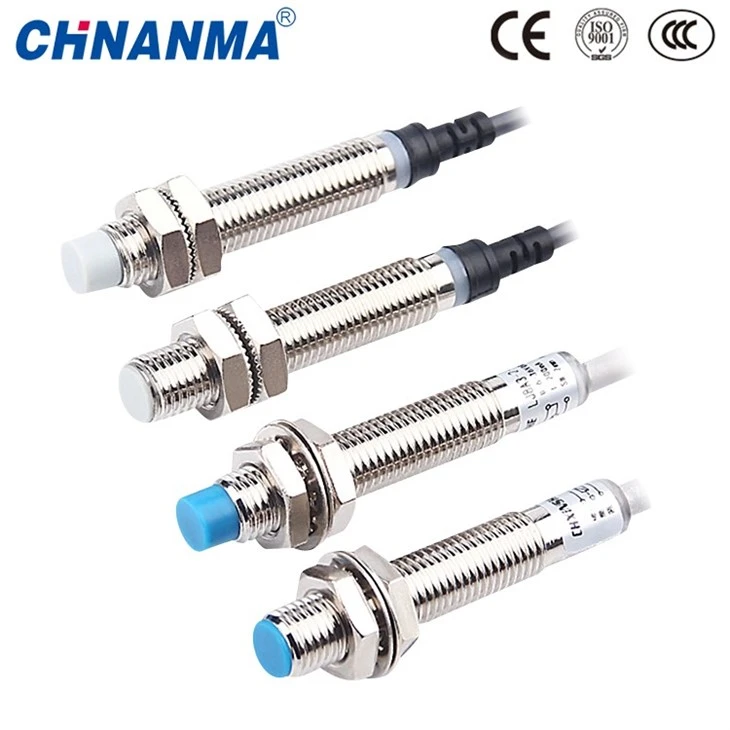
An inductive proximity sensor switch is an electronic detection device that detects metal targets by electromagnetic induction. It can determine whether a metal object has reached its intended detection range without physical contact with it and convert the results into an electrical signal output.
Unlike standard mechanical switches, inductive proximity sensors do not move contacts and are therefore not subject to mechanical wear and tear caused by frequent operations. In addition, since the detection process does not require direct contact with the workpiece, the risk of impact or damage during the operation of the equipment is minimal.
Inductive proximity sensors generally consist of the following core components:
1.Oscillator Circuit
The oscillator circuit is the core module to produce detection signal. When electrified, the internal coil produces high-frequency alternating current, which creates an alternating magnetic field.
2.Detection Coil
The detection coil is usually installed near the sensor's sensing face to generate and detect changes in electromagnetic fields. When a metal object enters the detection zone, the electromagnetic state around the coil changes.
3. Signal Processing Circuit
The signal processing circuit analyzes the amplitude of oscillation to determine the presence of metal targets. A control signal is sent to the output terminal when a change satisfying the specified condition is 4. Output Module
Output modules typically use PNP or NPN transistor outputs to connect to PLC, controllers, or automation equipment for device control.
II. Basic Principles of Detecting Metal Objects by Inductive Proximity Sensor
Inductive proximity sensors rely on "electromagnetic induction" and the "eddy current effect" to detect metal objects.
Specific operational processes can be summarized as follows:
Sensors generate magnetic fields → Magnetic field energy consumption signal output.
The process is as follows:
1. Sensors generate high-frequency alternating magnetic fields
Once activated, an internal oscillator drives the detection coil, producing a high-frequency alternating magnetic field. This magnetic field radiates from the sensor's sensing face, creating a detection zone.
When there is no metal object nearby, the oscillation circuit is stable and the sensor does not output a detection signal.
2. Metal object enters detection zone
When a conductive metal object --such as iron, stainless steel, copper or aluminum --approaches the sensor, it is affected by an alternating magnetic field.
According to electromagnetic induction, a circular current, called a vortex, is generated inside the metal.
These eddy currents produce magnetic fields in opposite directions, effectively neutralizing the initial magnetic field generated by the sensor.
3. Vortices reduce oscillating energy
When the metal absorbs some electromagnetic energy, energy loss in the oscillating circuit of the sensor increases, which causes the oscillation amplitude to decrease.
The closer the metal is to the sensor, the stronger the eddy currents, and the greater the energy loss.
Internal detection circuit continuously monitor these oscillations; once the changes reach a predetermined threshold, the sensor determines the presence of a "metal target."
4. Output Switch Signal
After signal processing, the sensor changes its output state-for example:
Metal-free Target: OFF output;
Metallica into detection range: output open.
This signal can directly control relays, solenoid valves, PLC input or automation control systems to manage the operation of equipment.
III. Why do inductive proximity sensors only detect metal?
Many users wonder: How can inductive proximity sensors detect steel but not plastic, glass or wood? The reason lies mainly in the difference of detection principles.
Inductive sensors rely on the generation of eddy currents in conductive materials; metals possess high electrical conductivity, allowing them to generate significant inductive currents in alternating magnetic fields.
For example:
Ferrous metals (e.g. iron, stainless steel)
They exhibit a strong electromagnetic response and produce distinct vortexes, leading to longer detection range.
Non-ferrous metals (e.g. aluminium, copper)
Although detectable, the range of detection may be affected due to the magnetic properties of the material.
Plastic, rubber, glass
These materials donot generate effective eddy currents and do not cause significant changes in electromagnetic fields, so sensors cannot detect them.
This is a key distinction between inductive proximity sensors and capacitive proximity sensors. Capacitive sensors can detect nonmetallic materials, while inductive sensors is mainly designed to detect metals.
IV. INTRODUCTION Factors Affecting the Detection Range of Inductive Proximity Sensors
In practical industrial applications, the range of sensor detection is not fixed and is influenced by several factors.
1. Type of Metal Material
Different metals have different electrical conductivity and magnetism, which affects the eddy currents strength.
In general:
Iron materials allow longer detection range;
Stainless steel results in a slightly reduced detection range;
Materials such as aluminium and copper may require specialized sensors.
2. Size of metal target
The larger the target object, the larger the area of interaction with the magnetic field, which creates a more pronounced eddy currents, making the detection performance more stable.
If the metal target is too small, the detection range may be narrowed.
3. Sensor mounting method
Mounting distance, surrounding metal structure, installation environment and so on will affect detection accuracy.
The presence of large metal components near the sensor can lead to false detection, so the detection zone must be carefully planned during installation.
4. Working environment
The following may occur at industrial sites:
Oil pollution;
Dust;
Moisture/vapor;
Vibration.
Inductive proximity sensors are characterized by an airtight design that does not depend on optical conditions and ensures excellent stability in harsh industrial environments.
V. Key Industrial Applications of Inductive Proximity Sensors
inductive proximity sensors have been widely used in various industries due to their fast response time, long service life and strong anti-jamming capability.
1. Automated production lines
Used to detect the presence of workpiece, determine the position of robot arm, locate conveyor equipment, etc.. CNC Machining Equipment
In CNC machine tools, they are used to detect tool position, workpiece clamping status and mechanical movement position.
3. Packaging Machinery
Packaging equipment requires high-speed testing of product locations such as:
Positioning of bags;
(a) Counting of hardware parts;
Conveyor line detection.
4. Automotive manufacturing
inductive sensors are widely used in automotive production lines to detect:
Component positions;
General Assembly status;
Robotic motion feedback.
V. Electrical and Mechanical Equipment
In equipment such as valves, cylinders and transmission mechanisms, they are used to detect the position and state of moving parts.
FAQ
Question 1: What metals can be detected by inductive proximity sensors?
Inductive proximity sensors mainly detect conductive metals such as iron, steel, stainless steel, aluminum and copper; however, sensing distance may vary depending on the metal type
q2:Can inductive proximity sensors detect plastic?.
No. Inductive sensors operate by creating metallic eddy currents; nonmetallic materials such as plastics, glass and wood do not produce effective detection signal.
Q3: What is the sensing distance of an inductive proximity sensor?
Typical sensing distances range from a few millimeters to tens of millimeters, depending on the sensor model, coil size and target material.